
The Role of Biostimulants in Ornamentals
In recent years, increasing focus has been placed on biologicals in both agriculture and amenity horticulture situations. This has been driven by a number of reasons such as improvements in biological product development alongside a reduction in plant protection products, cost and increasing regulation in various countries. Under the biological banner we find:
Biocontrols: Products derived from a natural or animal source and used as a control for pests and diseases in the same way as a traditional chemistry product is used, and
Biostimulants: Products applied to naturally elicit a plant’s response to stress.
Biostimulants could be classified into at least 7 various categories, with each category eliciting a plant response to their use. They are:
Humic/Fulvic Acids: organic molecules beneficial for soil and nutrient management. Humic acids are large complex molecules which in part boost exchange capacity in the soil, enabling more nutrients to be retained for the plant’s use. Fulvic acids, being smaller and more soluble molecules, facilitate entry into the plant and assist with nutrient uptake.
Protein Hydrolysates: they are a mix of amino acids, peptides, and small proteins. Amino acids are the building blocks of proteins, and as enzymes, they are the biological catalysts responsible for chemical reactions in living organisms.
Seaweed Extracts: best known as kelps, which can contain levels of essential minerals, vitamins, and plant hormones such as auxins, cytokinin and gibberellins which can promote plant health and development.
Chitosan: a biopolymer derived from chitin which is found in exoskeletons of crustaceans as well as in the cell walls of fungi. Through manufacturing, produced chitosan are naturally biodegradable and used to enhance nutrient uptake and induce response to stress.
Inorganic Salts: such as silica and phosphites which can be a source of certain nutrients and provide benefits through strengthening of the plant.
Beneficial Fungi: best known as Trichoderma or VAM type products.
Beneficial Bacteria: best known as Rhizobium, which fix nitrogen or Bacillus type products.
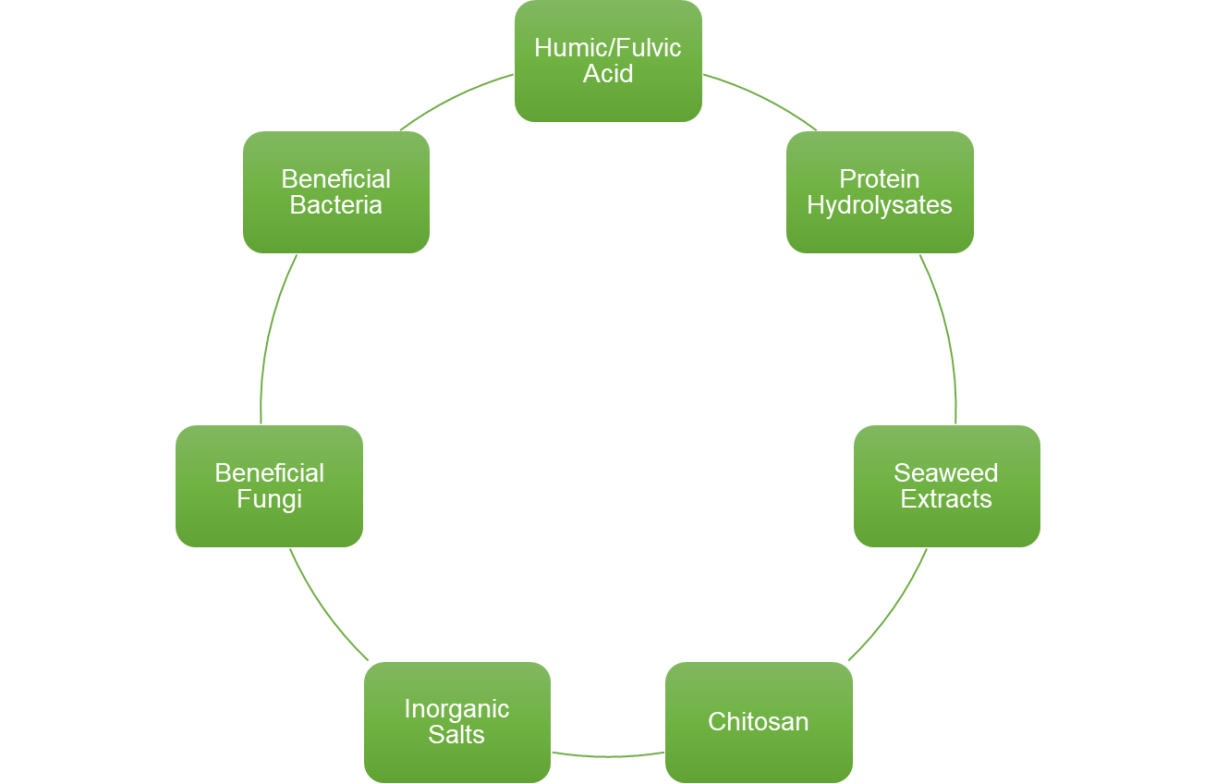
Figure 1. The seven categories of Biostimulants. Syngenta, 2024.
The outlined classification, however, is very general in nature and represents one of the challenges in today’s biostimulant market. Natural plant response to stress or pathogen attack are naturally inbuilt and have adapted over millions of years of evolution, seen in examples such as the hypersensitive response. Plants and grasses differ in their makeup which play a role in stress management. Plants which have adapted to shaded locations generally exhibit a darker and larger leaf with larger chloroplasts, enabling it to capture as much available light as possible. Zoysia grass contains a naturally high silica content in the plants leaf, providing an improved resistance to wear, insects, and shade concerns. Whatever the end scenario might be, then the surrounding plant life has adapted to that location.
When it comes to ornamental plant management, ornamental species in any given location are often subjected to stress, which ultimately impedes normal growth and development cycles. If we consider what a good, balanced growth cycle looks like, let's start with ornamentals in optimal growing conditions.
In this instance, the plant is producing sufficient energy for growth through photosynthesis and protein production. Non-required excess energy is stored as carbohydrates in the root system and other storage organs. As a result, the roots increase in mass. This provides flow-on benefits through improved water and nutrient uptake. On the surface, the ornamental plants will appear healthy and uniform.
In shaded locations, the available light captured will be lower impacting the amount of energy produced. To supplement the shortfall, the plant will draw on the stored energy in the roots and transform that in an effort to maintain regular growth. The drawdown on stored energy will result in the root mass decreasing and thinning, resulting in potential plant health concerns.
When plants are under stress and insufficient carbohydrates are available, amino acids can be used as a source of energy through a process known as catabolism whereby the molecules are broken down, releasing ammonia, and promoting respiration processes. However, without any supplemental intake of amino acids, then these levels in the plant will fall – particularly in the case of heat stress being imparted on ornamental plants. One source of amino acids for plants is the soil, however if the root system is compromised then uptake falls further.
Amino acids are the foundation of:
Proteins, crucial for a range of physiological processes in plants from growth and development
Stress’ response
Metabolic pathways
Regulation of cell functions and structure.
Peptides are short chained amino acids, linked by a chemical bond which also play key roles in plant health and development, such as: defense against pathogens, regulating various physiological functions and stress response. Together they are essential for influencing the most basic to the most complex processes within the plant.
Recently Syngenta released HICURE® Biostimulant, its first amino acid specific biostimulant. HICURE® consists of 19 various amino acids totaling 62.5% concentration in a combination of free amino acids, short chained peptides and long chained peptides. The free amino acids assimilate rapidly into the plant and are immediately available for various processes. Short chained peptides absorb next and are converted to amino acids as required while long chained peptides provide excellent surfactant qualities to the leaf while being absorbed. Of the 19 amino acids, HICURE® exhibits high levels of both L-Glycine and L-Proline amino acids. L-Glycine is the smallest amino acid meaning it is an excellent organic chelating source for use with fertiliser. L-Proline is one of the most important amino acids and plays essential roles in photosynthesis, osmotic stress protection and overall cell strength. Derived from a natural source, the stringent manufacturing process ensures consistency from batch to batch. Applied either as a preventative or curative, trials have shown multiple benefits to plant health and recovery when using HICURE®.
The biostimulant market is largely unregulated, resulting in many products entering the market without significant trial work to support their claims. Syngenta is changing this paradigm with the launch of HICURE®.
HICURE® has been available in Europe for over 10 years and in numerous countries worldwide. Prior to launching HICURE® in these markets, Syngenta conducted extensive scientific trials over many years, utilizing independent contractors to ensure unbiased results.
To introduce HICURE® locally, Syngenta performed additional scientific trials to verify that the plant health benefits observed overseas are replicated in local plant species. This comprehensive approach brings substantial scientific data to the biostimulant market, underpinning the credibility of HICURE®'s plant health benefits.
Syngenta's commitment to rigorous testing supports the rollout of HICURE® in production nurseries and landscapes across Australia and New Zealand. This science-backed approach sets a new standard in the biostimulant industry, offering a reliable product for enhanced plant health and performance.
For more information visit syngentaornamentals.com.au or contact your local Territory Sales Manager.
Always read the label before use. Syngenta Australia Pty Ltd, Level 1, 2 Lyonpark Road, Macquarie Park NSW 2113. ABN 33 002 933 717. ®Registered trademark of Syngenta Group Company. All products written in uppercase are registered trademarks of a Syngenta Group Company. © 2024 Syngenta. ED 24-358.


